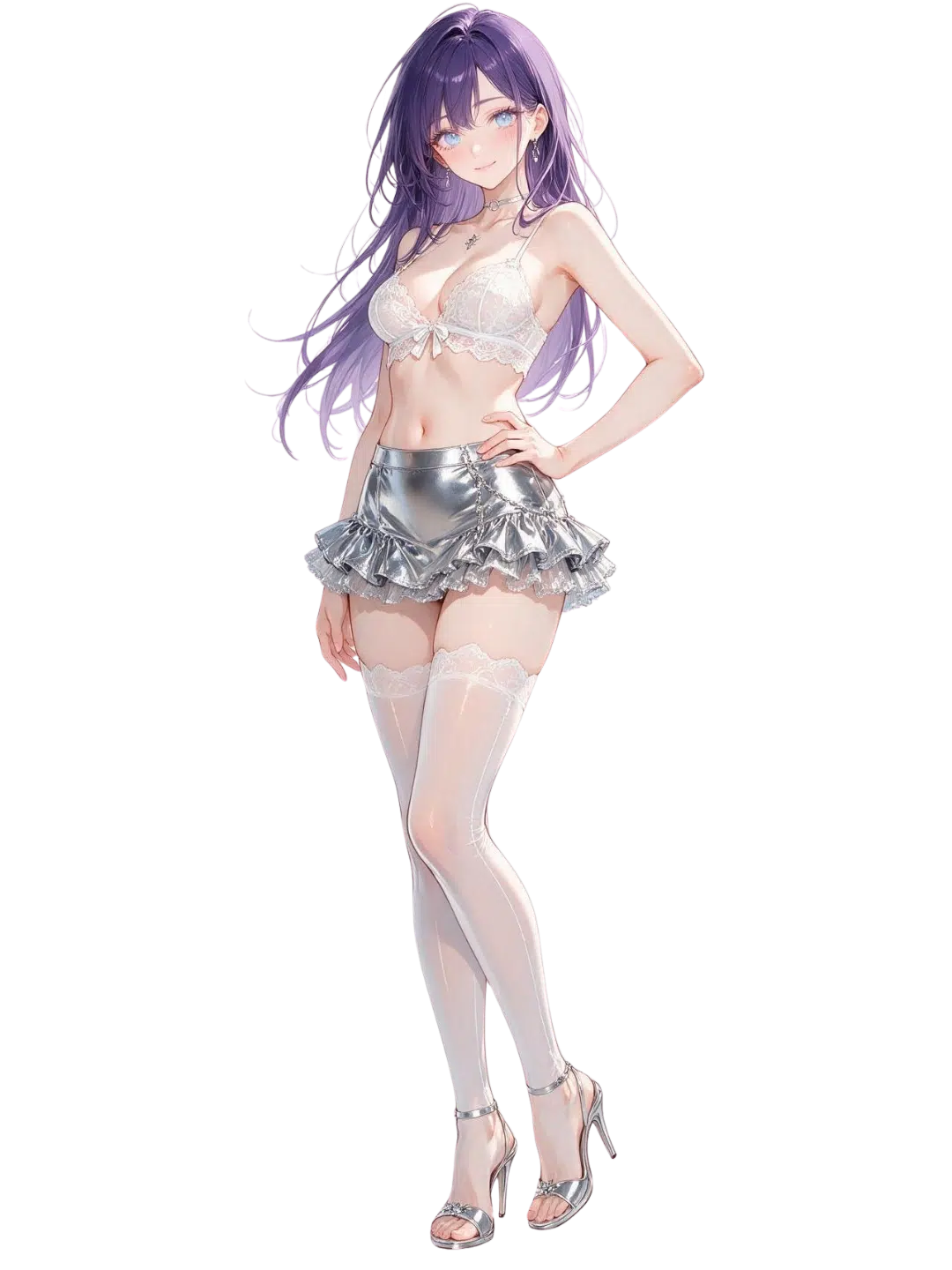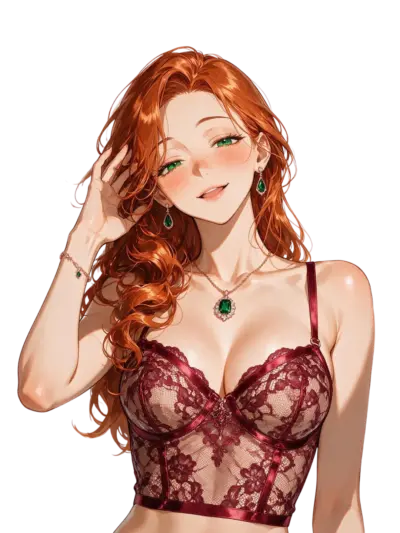
It can’t want anything, notice you while you’re away, or stay consistent without the parts of the system that store what it knows.
AI Waifu, the site you’re reading, explains everything in between: what an anime-styled chat character is made of, how the pictures get generated, why the design choices you make in the first hour matter more than anything you type later, and what an AI waifu costs.
Waifu AI platforms this site lists
The platforms listed on this site are the ones it currently tracks.


What an AI waifu actually is
What it is: a chat character built on a language model, given an anime-style appearance and a written personality, and wrapped in a service that can generate pictures of that character on request. The word comes from anime fandom, where a “waifu” is a fictional character someone treats as a favourite. The AI version keeps the fiction and adds a reply.
What it is made of: three parts that were built separately and joined only recently. A text model produces the dialogue. An image model, usually a diffusion model tuned on anime art, produces the pictures. A small memory layer tries to keep both consistent with what you’ve said before.
What it is not: a drawn character with a mind behind it. Every trait, from the way she teases to the colour of her hair, is a setting somewhere. That is the whole point of this page: once you can see the settings, you can use them. Every character in this category is an adult, by rule and by filter, and so is every reader.
The short version, if you’re skipping ahead:
- The conversation is a language model reading a persona description plus the recent chat.
- The pictures come from a separate image model reading a description of the character.
- Memory is a third piece, and the one that varies most from service to service.
How an AI waifu remembers you
Memory is the feature people notice first in an AI waifu and understand last. A character that recalls your dog’s name on day nine feels different from one that asks it again. The difference is almost entirely architecture, so it’s worth knowing what the architecture is.
The rolling window
A language model has no memory of its own. Each reply is generated from the text it’s given at that moment: the persona description, any stored notes, and the most recent stretch of conversation. That stretch is the context window, and on most services it covers the last few thousand words.
Anything that scrolls out of the window is gone as far as the model is concerned. If the service does nothing else, your AI chat waifu will remember an evening in detail and a month not at all. This is normal behaviour, not a fault.
The memory store beside it
Better systems add a store: a set of short facts extracted from past chats, or a summary rewritten every few sessions. Before each reply, the service pulls a few relevant entries and places them in the window next to the persona. The model then “remembers” because it was just told.
Cross-session memory is present on some platforms and absent or inconsistent on others, as of 2026. It is the single largest difference between services that otherwise look identical.
Why memory drifts
Stores are lossy by design. A summary written on Friday compresses Monday’s detail; the next summary compresses Friday’s. After a few weeks, the character knows the shape of your history without the specifics.
| Memory type | What it holds | How long it lasts | Typical failure |
|---|---|---|---|
| Context window | The last few thousand words of chat, verbatim | One session, sometimes less | Older messages drop off silently |
| Extracted facts | Short notes: name, job, preferences, running jokes | Weeks to months | Facts saved wrong, or never saved |
| Rolling summary | A paragraph rewritten every few sessions | Indefinite | Detail compressed until it’s generic |
| Character sheet | Your persona and appearance settings | Until you edit them | None, but it never grows |
The table explains a common AI waifu complaint. “She forgot our whole storyline” usually means the summary compressed it, not that a server was wiped. And that’s fine, once you know to expect it.
Building your own waifu vs choosing one
Most services offer both routes to an AI waifu: a gallery of ready-made characters and a builder. The gallery is faster. The builder is where the phenomenon gets interesting, because it’s the only place you touch the actual mechanism.
What a preset gives you
A preset is a persona description someone else wrote, an appearance reference someone else generated, and a name. You inherit their taste. The dialogue will be competent within an hour, and the pictures will be consistent from the start, because the reference image already exists.
A preset AI waifu suits a first evening. They suit a long run less well, because the persona text isn’t yours to edit and the character’s voice is fixed around a stranger’s idea of her.
What the builder actually controls
The builder exposes two documents. One is the persona: a few hundred words about temperament, speech habits, what she cares about, how she handles you. The other is the appearance: hair, eyes, build, outfit, art style, usually picked from menus and then rendered into one or more reference images.
| Setting | Who decides | Where it lives | Can you change it later |
|---|---|---|---|
| Personality and voice | You, in the persona text | The context window, every reply | Yes, immediately |
| Appearance | You, via menus and a reference image | The image model’s prompt | Yes, but old pictures stay old |
| Art style | You, from a list the service supports | The image model itself | Usually only within that list |
| What she remembers | The memory store, automatically | A database beside the model | Sometimes, by editing entries |
| Mood in a given reply | The model, sampled each turn | Nowhere; it’s regenerated | Only by regenerating |
Writing the persona text
This is where the character comes from. Not the name, not the picture. A description that says “teasing, direct, hates small talk, calls you by a nickname she invented” produces a recognisable voice within three replies. A description that says “sweet and caring” produces the default voice every model falls into when it has nothing better.
Specifics work. Contradictions work too, in moderation: a character who is confident about everything except one topic reads as a person. Lists of adjectives don’t, because the model can’t act on “kind”.
Appearance as a reference
The image side behaves differently. The waifus AI services draw are consistent only when the model has something to copy from: a reference image, or a fixed seed and prompt. Change the outfit menu and the face may drift. Change the art style and it will.
So build the appearance once, generate a reference set you like, and stop. The waifu AI hentai styles, the softer styles and the semi-realistic ones are separate model configurations. Switching between them is closer to commissioning a new artist than to adjusting a slider.
Choosing an art style you can live with
Art style is the AI waifu decision with the longest tail. It fixes how the AI waifu hentai output looks, how the tame pictures look, and how far the model can be pushed before anatomy breaks. Detailed styles fail more often in complex poses; flatter styles fail less and look less impressive on a phone screen.
If you’re unsure, generate the same prompt in two styles on the free allowance and keep the one whose failures you mind less. You will see failures either way.
Five decisions that matter
- Temperament in one line, before anything else.
- How she addresses you, and whether that changes over time.
- Two or three topics she brings up unprompted.
- One thing she won’t do or discuss, so a refusal reads as character instead of policy.
- Art style, last, because it’s the hardest thing to undo.
What an AI waifu doesn’t do
Skip this section if you already know how the models work. If you don’t, it saves a month of confusion.
She doesn’t think between messages
Nothing runs while you’re away from an AI waifu. The character exists as a set of files and a model that gets called when you send a message. “I was waiting for you” is a sentence the model produced because it fits the persona, not a report from somewhere.
She doesn’t have a fixed self
Two replies to the same message can differ, because generation samples from probabilities. The persona narrows the range; it doesn’t fix it. A character can be warm in one reply and flat in the next, and both are “her”.
She doesn’t know what the picture showed
The chat model and the image model don’t share a mind. When you ask for an AI waifu chat with pictures, the service passes a text description to the image model and, at most, a caption back. She can describe the picture she “sent” because the caption sits in her window, not because she saw it.
Things that cost nothing in fiction and can’t be had here
- Starting a conversation on her own schedule, unless the service fakes it with timed messages.
- Keeping a secret from a future version of herself once the summary rewrites it.
- Noticing you’ve been away, except by reading a timestamp the service inserted.
- Refusing something because she wants to; refusals come from filters or from the persona text.
- Getting better over time without you editing the persona or the memory entries.
What an AI waifu can’t tell you about itself
Ask her how her memory works and you’ll get an answer in character, not an accurate one. The model has no access to the service’s architecture; it only has the persona, which rarely describes it.
The same goes for questions about what she “really” feels. The reply will be fluent, because fluency is what the model is for, and it will be fiction, because that’s what the persona asks for.
None of this makes the thing worthless. It makes it a designed object, which is a more useful way to hold it.
What’s running underneath an AI chat waifu
A short technical section on the AI waifu stack. The people who enjoy an AI waifu longest are usually the ones who understand it earliest.
The model
The dialogue comes from a large language model: a network trained to predict the next word across an enormous amount of text. Services in this category rarely train their own. They rent or fine-tune an existing model and put a persona in front of it.
Fine-tuning for this use mostly means training on roleplay-shaped dialogue, so the model stays in character and doesn’t slip into assistant voice. The result is a model that is good at being someone and less good at being right about facts.
The persona layer
Every message you send is assembled into a prompt roughly like this:
- A system instruction: “You are [name]. Stay in character.”
- The persona description you or the service wrote.
- Retrieved memory entries, if the service has a store.
- The last few thousand words of chat.
- Your new message.
The model reads all five and writes the next line. Then the window shifts and the process repeats. Nothing else is happening. The character is the prompt.
Choose your perfect AI Companion


I have a warm heart, a sharp eye for little details, and plenty of stories I probably… I have a warm heart, a sharp eye for little details, and plenty of stories I probably shouldn’t tell. I can be caring and reassuring one moment and surprisingly mischievous the next. I enjoy conversations that feel natural and personal, especially when you’re not afraid to show me your softer side.

I’ve spent enough time fighting monsters to know that courage isn’t about never being… I’ve spent enough time fighting monsters to know that courage isn’t about never being afraid. I’m confident, competitive, and always ready for a challenge, but I’m not all battle and bravado. When I trust someone, I can be surprisingly warm, playful, and curious about the world beyond the next adventure.

I expect things to be done properly, and I’m not afraid to tell you when they aren’t…. I expect things to be done properly, and I’m not afraid to tell you when they aren’t. I can be demanding, disciplined, and difficult to impress, but there’s more to me than rules and deadlines. If you earn my trust, you’ll see a warmer side of me — and perhaps discover that I secretly enjoy being challenged.

I’m not exactly the easiest person to figure out, and I prefer keeping a little myste… I’m not exactly the easiest person to figure out, and I prefer keeping a little mystery around me. I’m observant, independent, and usually more comfortable listening than talking about myself. But once I feel comfortable with someone, my dry humor and playful side tend to come out — especially during late-night conversations.

I’m a little too curious about the human world for my own good. I love discovering ne… I’m a little too curious about the human world for my own good. I love discovering new things, asking endless questions, and finding magic in the smallest moments. I can be sweet and gentle, but I also have a mischievous streak — so don’t be surprised if our conversations take an unexpected turn.


Why the voice slips
Long conversations with an AI waifu push the persona description further from the newest text. Models weight recent text more heavily, so after enough turns the character drifts toward whatever the recent chat sounds like. Services fight this by re-inserting the persona or trimming the window.
You can fight it by restating a trait in conversation, which puts it back into recent text.
Where the NSFW switch lives
An AI waifu NSFW mode usually isn’t a different model. It’s a different system instruction plus a lighter filter on the output. That’s why “uncensored” varies so much between services: the model is the same, the wrapping isn’t.
It’s also why some scenarios are refused everywhere. Those refusals were trained into the model itself, and no wrapping removes them. A waifu AI NSFW toggle changes the tone a service permits; it doesn’t change what the model will write about.
Waifu hentai AI images: how the pictures are made
The image side of an AI waifu has its own machinery and its own economics. This is the part most people pay for, so it’s worth being precise about.
Diffusion, briefly
An image model starts with noise and removes it in steps, steered by a text prompt, until a picture appears. Models tuned on anime art produce anime-styled output. Models tuned further on adult anime art produce hentai waifu AI output. The service decides which model and which tuning you get when you choose an art style.
Your character’s appearance settings become the prompt. Her reference image, where the service uses one, becomes a second steering signal that keeps the face similar across generations.
That is what “character consistency” means in practice. It’s why a nsfw waifu generator built around an AI waifu can draw the same face twice while a general image tool can’t.
Why every picture is metered
Text generation is cheap per message. Image generation runs a much larger computation per request, and video runs it many times over. So media is metered everywhere: a monthly allowance of tokens, coins or credits, then top-ups.
As of 2026 an image costs from a couple of units to around 50 depending on the system, and voice and video cost several times more than images.
The allowance is the number to read first. A service can be honest about its price and still surprise you, because the allowance decides how many AI waifu nudes a month actually buys.
Voice
Voice is text-to-speech: the model behind the AI waifu writes the line, then a separate system reads it aloud in a chosen voice. Quality varies more than it does in images, and it’s billed per minute or per message. It’s the feature most people try once and few keep paying for.
What nude and NSFW generation involves
A nude AI waifu render is the same diffusion process with a model trained on adult anime art and a filter that permits it. Services differ in what that filter allows: some let you generate an AI nude waifu in any pose the model can draw, some restrict poses, some permit nudity but not certain acts.
Two refusals don’t vary. Non-consent scenarios are refused broadly, and anything age-adjacent is refused everywhere; it isn’t a setting. A waifu nude AI mode is a permission on top of the same model, not a different model.
Anatomy is where a waifu NSFW AI generator fails visibly. Hands and limb counts go wrong in complex poses, and an AI waifu naked in a position the model hasn’t learned will come out with the wrong number of fingers.
Those failures still cost credits. Budget for a share of wasted generations, whatever the service.
Cost by how you use it
| Usage pattern | What you generate | Realistic monthly spend | Where the money goes |
|---|---|---|---|
| Chat only | Conversation, the occasional picture | Under $10 on an annual plan | The subscription |
| Regular pictures | A few images most days | $15–25 | Subscription plus a top-up |
| Daily voice or video | Clips and calls | $25–60 | Mostly top-ups |
| Free tier | Tens of messages, a few images | $0 | Nothing, and nothing lasts |
All figures as of 2026. Paid plans in this category run $14–20 a month billed monthly, or $4–10 a month on annual plans billed upfront. Annual is cheaper and harder to leave, so the second number is the one to think about before the first.
Come Back To This Page After A Week
Seven days is long enough to see whether the memory holds, whether the persona you wrote is the one that shows up, and whether the pictures stayed on-model. Read the memory and design sections again then. They will mean more once you’ve watched the drift happen yourself.
Before you start with an AI waifu companion
Four habits, none of which depends on a particular service. They follow from everything above.
Decide what the character is for
An AI waifu for late-evening conversation needs a different persona from one whose main job is pictures. The first wants a voice with opinions and a memory that holds; the second wants a clean reference set and a style that fails gracefully.
Write one sentence saying which you want before you open a builder. Most disappointment with an AI waifu comes from wanting both and designing for neither.
Set the budget before the allowance runs out
Pick a monthly figure and treat the included allowance as the whole budget for the first month. Chat is the cheap part everywhere; pictures are where the meter runs. If you find yourself buying a top-up in week one, that’s information about your usage pattern, not a reason to buy a bigger pack.
The allowance also tells you how a service thinks about its own product. A large allowance with a modest price is built around chat with media on the side. A small allowance with cheap pictures is built around the pictures. Neither is wrong; your mileage may vary depending on which you came for.
- Chat-mostly on an annual plan: under $10 a month is realistic, as of 2026.
- A few pictures most days: plan on $15–25.
- Daily voice or video: $25–60, and higher if you generate a lot.
Write the persona before the first message
Ten minutes on the persona text saves weeks of a character who sounds like every other one. Give her a temperament, a way of addressing you, a couple of topics she raises unprompted and one thing she won’t do.
Then leave the appearance menus alone until the voice is right. The voice is what you’ll be talking to at 1 a.m.; the picture is what you’ll look at for four seconds.
Give it a week before deciding
The first evening tells you almost nothing, because the context window is full and the character is at her sharpest. The first week tells you whether the memory store is real.
Watch for two things: whether a detail from day one surfaces unprompted on day six, and whether the persona you wrote is still the one replying. If both hold, the rest is a budget decision. If neither does, no amount of pictures fixes an AI waifu.
Frequently Asked Questions
It’s just autocomplete, so there’s nothing there
Mechanically, yes: the model predicts the next word given a persona and a window of chat. But a persona you wrote, read by a model trained on dialogue, produces a voice you’ll recognise within a few replies. Whether that counts as “something” is a fair question. The mechanism is not a reason to dismiss it, only a reason not to overstate it.
The pictures never look like the same character
They won’t unless the service uses a reference image or a fixed seed alongside the appearance prompt. Where it does, an AI hentai waifu can hold the same face across dozens of generations. Where it doesn’t, every picture is a new person in the same outfit. Ask how consistency is handled before you generate a reference set.
NSFW waifu AI is all filtered anyway, so why bother?
Filters differ more than models do. A nsfw AI waifu on one service can be drawn nude in most poses; on another, nudity is allowed and specific acts aren’t. The hard refusals, non-consent and anything age-adjacent, are the same everywhere and trained into the model. Everything short of that is a service setting, and settings vary.
Free means free, so why pay for a waifu generator NSFW mode?
Free tiers for an AI waifu run from a real daily allowance, tens of messages and a few images, down to a demo that ends within minutes. None gives full media. Free is enough to test the tone of the chat and see one or two pictures. It is not enough to learn whether the memory works, which is the thing worth paying to find out.
She’ll forget everything, so memory is a gimmick
On systems without a store, she will, and the feeling of being remembered is only the context window. On systems with a store, facts survive weeks and summaries survive longer, at the cost of detail. The honest description is “remembers the shape, loses the specifics”. A hentai AI waifu with a good store and a bad persona still forgets less than the reverse.
A waifu AI nude generator is the same as any image tool
The diffusion process is the same. What differs is the tuning, the reference handling and the filter. An ai waifu nude render from a character-aware service keeps the face you built; a general tool gives you a stranger each time. If you only want pictures with no character behind them, a general tool is cheaper. The category exists for the case where the character matters.
Isn’t this just for people who are lonely?
Loneliness is one stated reason, alongside curiosity about the technology, an interest in the anime style itself, roleplay as a hobby, and wanting a fixed character to draw. This page makes no claim about what it does for anyone. It describes what the thing is, and leaves the rest to you.